The Future of Cryptocurrency

Everyday you hear more and more about Bitcoin, Ethereum and the growing number of cryptocurrencies.  As the gains and losses in this cyber money ebb-and-flow, prepare to have it permeate throughout our daily lives in heavy doses going forward.  That being said, what does the future hold for cryptocurrency?  Well, in a nutshell, and again this is merely my speculation from the information accumulated, the future is not a positive one.  Try not to be swayed by the ads, news, and media hype surrounding how cryptocurrency will make you a millionaire overnight, and look deeply at the underlying trajectory this new money system seemingly is on.  As you read this article I hope to unveil the origins, the direction, and some speculation for the future of what new, and even old, investors may witness in the digital money phenomena sweeping the world.

The first known incarnation of cryptocurrency proves a two-fold history.  During the period of the 1980s to the Dot.com boom of the 1990s, the United States Federal Government, under the direction of the Treasury and National Security, was formulating a monetary system that could be traceable and easily identifiable to prevent money laundering and monitor any criminal enterprise activity.  As a thorough implementation of this would require a full public money standard transition, the project was delayed until a proper transition could be coordinated.  Fast forward to 2008, when one of the worst economic meltdowns in American history took place, requiring a bailout of the banks, a multitude of established retailers shutting their doors and filing for bankruptcy, and the populous’ confidence in our economic system diminished in the blink of an eye.  Shortly after, in 2009, either a person or group of people known as “Satoshi Nakamoto”, brought Bitcoin and the digital currency space to the public.  Due to the recent economic catastrophe, Bitcoin was lauded as a “savior”, and a way to “…keep wealth and money outside of the system…”.  Though the initial patronage was minute, public intrigue for Bitcoin and the rise of other digital currencies began.  Based on blockchain technology (I will leave a link for explaining this), and the execution of smart contracts (implementing its value similar to the stock market), Bitcoin was born.  The principle of this “wealth storage” occurs in how everyone is able to participate in purchasing (with accepted fiat currencies), mining, or trading digital coins, so aptly called bitcoins.  These obtained coins can be stored within a “digital wallet” for future usage or exchanges.  As cryptocurrencies quickly become acceptable legal tender in several retailers and countries, its usage grows for the purchase of goods and services.  Additionally, similar to a stock market or financial portfolio, these digital wallets store your available coins, which may incur gains, based on the speculation, trading, and increases in the given currency.  But, much like the stock market, volatility is present as these currencies experience highs-and-lows in valuation.  This is evident in the recent spikes and crashes of several cryptocurrencies, so for all currently or looking to invest, please proceed with caution and continued education.

Now, in order to understand the direction of cryptocurrency, I believe a brief history lesson is necessary so we understand the comparable and the similarities in past events, and from there we can predict the underlying purpose of digital currency.  The year is 1921, and America is slowly pulling itself out of one the worst economic recessions in its young history.  Several economists blame the recession, and sharp decline in the value of the U.S. Dollar, on many factors inclusive of re-integration of soldiers returning from World War I, a sharp turn in economic and fiscal laws passed by the Federal Government, and a prevailing shift away from an agrarian society.  During the fourteen month period from January 1920 to July 1921, money was nearly valueless and thousands of Americans found themselves out of work.  Within a matter of months, the economic tides shifted, and businesses began their slow climbs back to relevance.  Faith in the American economic system, however, reached an all-time low and the population was afraid another, more catastrophic downturn could be on the horizon.  But the American government and the up-and-coming banking system encouraged the people the “Roaring ‘20s” were here to stay, and investment in the stock market institution was a means in achieving great wealth and the “American Dream” of rags-to-riches.  So, as the appearance of wealth remained for the much of 1920s, people were riding the highs of the stock market, as patronage reached an apex in 1927.  Fast forward to late 1929, as worldwide panic in European markets rose, over speculation was rampant, and the threat of another world war was prevalent, when the global system showed signs of crumbling.  In October of 1929, the day of infamy known as “Black Tuesday” hit the stock market and American population alike, and hit them hard, as fortunes were lost overnight.  The effects of that day would linger for nearly two decades as speculation in the overvalued stock market had reached its tipping point.  As the smoke cleared, multiple investors, bankers, and business giants, both foreign and domestic, were jailed for fraud and forgery.  Investigation and reviews concluded global stock markets continued their meteoric rise because of manipulation, insider trading and buying, and heavy reliance on public investment to prop the systems up, resulting in large companies and investors making millions, while the working class lost almost everything.  The same comparables can be seen with our current state of affairs.  For all intents-and-purposes, 2008 can be seen as a period of monetary fear as a deep recession hit the world.  Truth be told, it was more than that, as in my humble opinion, the economy we once knew perished that year, and has merely been held together by government policy, and a few smoke and mirror tricks by the banks.  Much like the stock market of the 20s, cryptocurrency has come along as a method for the people to “…operate outside of the system…” and achieve wealth.  However, similar to those Roaring 20s, we currently are experiencing the highs, but I feel the impending doom for the digital money looms around the corner, and much like before, several who have invested will be left with significant losses after investing their hard earned money.  Furthermore, in the near future, I fear those currently investing in digital currency may find a version of it is the currency of the future, but only after large sums in wealth are lost.  But we will delve more into that.

So what is the future for cryptocurrency?  Ain’t that the million dollar question!  Predicated on research and obtained information, my belief is cryptocurrency/digital currency is here to stay…but not in a good way!  If you have not already heard, China, Russia, India, and even America, just to name a few, are countries heavily invested in creating a digital currency as the new money standard for their respective territories.  For Americans, the idea of the dollar being abolished and the possibility of the FedCoin remains as a distinct reality.  Also, several established banks such as Bank of America, Huntington and PNC have filed several patents for digital systems to handle an entirely digitized money system, as the integration away from paper fiat money is already in the works; we the people just were not in the know.  Also, I believe a major “event” is set to happen in the world of cryptocurrencies, and this event will give credence for possible intervention from the Department of Justice, or massive raids and take over of digital markets by other departments in the Federal Government, leading to extreme regulation and possible running by a current or future wing of the government.  That event could be investigation into the multiple accounts of digital currency fraud we currently are told about by the news media outlets, the security agencies of the government finding that money laundering for terrorist groups are occurring, or regulation for the principle of protecting investors.  Whatever it may be, I truly foresee a government takeover and/or regulation of the digital world.  This argument is only strengthened by observing how the Chinese government is implementing policies to limit new IPOs and digital currencies from arising, possibly paving the way to unveil the digital Yuan or the proposed ACYuan, as the new currency of the country.  Venezuela is another example of what might happen, as after nearly three years of the people suffering in abject poverty and starvation, the country’s leadership will attempt to institute a new digital money system, and abolish the current Bolivar paper money.  But delving even deeper to fully understand what may be the true intent, governments of the world have informed us numerous times it promotes advancements in the private sector, with the hopes of integrating that progress within the constructs of the central government at later points when all the bugs are worked out, and the people are more accepting.  So why would this be any different?  One might say all the cryptocurrencies in place right now are merely the testing grounds before a takeover or later role out of government-backed digital currencies throughout the world.

But one more paramount reason for my bleak outlook on digital currency is the mere fact that wealth and ownership are not realities, but simple concepts we cling to.  Before the pitchforks come out, please hear me out and truly contemplate on the validity of my point.  Less than 5% of the American population has achieved financial success over $250,000 in savings by gathered statistics.  Let that sink in, less than 5%, and that number drops substantially the higher up the monetary pyramid you get.  We all have the freedom to chase wealth, but there are things in place which make it difficult to achieve.  During the stock market boom of the 1920s, only a small percentage actually obtained financial gains from playing the market, but many lost nearly everything.  I foresee the same in this stock market of today, as millions will invest large sums, but only a handful will achieve any significant gains.  I hate to be the burden of bad news, but this is how so many of the pillars in the economy go; get the publics money and run!  The truth remains that wealth, and even ownership for that matter, are principles and ideals.  Do you own your home?  Your car?  Some of you may have answered “yes” because you paid off the debts on these possessions, but you truly don’t own them.  For those that paid off your mortgage or purchased your house with cash, you only have a Warranty Deed, and a warranty deed only gives you a claim in ownership.  If you don’t pay your taxes for any length of time, you will see just how quickly your ownership is stripped, and that house becomes property of the state or a bank.  Same is true for your car as well.  Should you fail to keep your registration current, or drive without insurance, your prized possession will quickly becomes property to someone else, or a nice ornament for your driveway.  Honestly, we as people don’t have wealth and surely don’t have ownership, but millions of us do have debt.  Being truthful, economists tell us to have debt and take on more debts, as that is what our global economic system is based on.  So how can you have any wealth if all you are encouraged to do is take on debt?  Will investing in cryptocurrenies change that?  Well, that is why so many people have flocked to cryptocurrency, as they see it as a means to ride the highs and obtain wealth.  I hate to burst the bubble, but the system was not designed for that.  It was however, designed to get you into this new system, giving your consent as we usher in a completely digital age.  And in that digital age, all of your money will be in the system, although current claims are to the contrary, and in that new system, your money will be managed for you.  It would not shock me at all, as paper money becomes the way of the dinosaur, that the new digital money is regulated to encourage spending and further matriculate our debt based society.  Once your money is digital, interest rates could go negative, meaning money in the bank or digital wallet would actually cost you.  Smart contracts and pre-payment for goods and services could be the norm for this future.  This attack on principal wealth would make anyone incur more debt in order to preserve whatever buying potential they have and acquire goods before the loss of funds occurs.  Remember, all these cryptocurrecnies are predicated on technology, and the current technology can be easily accessed and manipulated by anyone with the knowledge of how to manipulate those technologically-based system; so I ask, how are cryptos outside the system?  The undeniable truth remains it truly is the new system.  Again, I’m not one to say it is a pointless endeavor, but do not make the mistake many made back in the 1920s.

It was once said that in order to understand where we are going, we must understand where we have been.  I believe no truer words have been spoken, that could be related to the past, current and future of cryptocurrency.  Though MY, and I emphasize that, outlook is a bleak one, it is one we must discuss, in order to get a clear understanding of this new monetary enigma.  Looking at past events in our history, understanding our current market system, and reviewing all the unfolding events will help paint a clear picture of the future of digital currency.  Also, please remember I am not saying stay clear of this new money, far from it, but do your research before you jump in.
What is Blockchain?


Are Wearables Still A Thing?

So the big Apple Event came, it saw, it conquered, more-or-less and left its faithful fan base clamoring for more.  Now that the new iPhone 8 and 8 Plus, iPhone X and the Apple watch, all set to drop either later this month or first part of November, have been unveiled, color me somewhat impressed but highly confused .  All the while, during the marketing, excuse me, press event…Freudian Slip; I kept asking myself a multitude of questions such as:  1) Would anyone really pay $999.00 plus tax for a phone? Come on, that’s like six or seven months worth of groceries.  2) Why is Apple making it seem like they were the first one to do many of these features?  I mean (fill in the blank) did this like (fill in the blank) years ago.  But the most important was, 3) Will the Apple watch actually do well; I mean, are wearables still a thing?  Apparently, Apple still thinks wearables are a thing, and based on previous years sales, they would be foolish not continuing the offering.  However, a question such as this requires more than surface viewing of sales in ascertaining whether wearables are still relevant.

In understanding the essence of this quandary, we must first be honest with ourselves in addressing that the mobile technology industry is utterly stagnant right now.  No longer are the days of 2007 to 2015, where breakthroughs and advancements define whether a device is cutting edge and worthy of consideration.  Now, mobile devices have become more about novelty, convenience, and fashion.  As such, companies are cashing in by placating more to our desires to have the “latest trends” as opposed to a device’s innovations and added value in our lives.  Don’t get me wrong, the usefulness of your cellphone remains a stable, as it is our life line in staying in touch with others, browsing the web for useful (or nonsense) information, or merely conducting your daily business affairs.  And that remains my point, ONE device should be the backbone of our productivity.  Believe me, wearables are slowly becoming their own stand alone entities, but can they replace the array of uses a cellphone offers?  My opinion is these are more a fashionable augmentations, but not necessities, and as such, definitely do not seem overtly relevant.  Doing this article made me think about Google Glass, one of the first major wearable, and how that was supposed to revolutionize the tech industry.  And it did, for a time, but the novelty wore thin as its pragmatism was superseded by the the more multi-purpose smartphone.  Let’s play the anecdote game, if you had a good car, would you buy a motorcycle?  I think many would answer “yes”, but what would be your reason?  Many would probably say, “Because having a motorcycle would be cool and fun.”  That is exactly the point, the motorcycle would be desired more for its novelty and enjoyment, less for its practical replacement of the automobile.  Some situation may cause this to vary, but overall, most would claim this to be the case.

Building off the notion of novelty versus necessity, we find ourselves at the corner of price and usefulness, while walking through these rough city streets searching for answers.  At launch, the Apple Watch 3 will debut with a $399 price tag, respectively, while its iPhone counterparts will start at $699 and $799.  As stellar and impressive as the Apple Watch 3 may be, is it overall utility equal or greater than its phone brethren, and the resounding answer of “no” seems obvious to me.  Though it can make/receive calls, play music, view/send text messages, can you honestly see yourself doing more?  Does writing or responding to an email seem plausible?  Watching video content for any period of time?  Playing a graphic-demanding game?  You probably found yourself with the conclusion of “no” to all or any combination of these questions.  And as such, the $399 price point proves disproportionate to usefulness/functionality comparative to its phone alternatives.  A more feasible price point for wearables would start at $15 (for items such as fitness trackers) and maxing out at the $200 price (for smart watches).  This is just my humble opinion, as it does not make sense for their pricing to be anywhere near that of a more encompassing phone.  My stance remains that until we reach a point when wearable pricing is comparable to its added value in our daily lives, I will continue seeing these as secondary technology, bought only if our wants outweigh our needs.  Or if a rich uncle just kicked the bucket and left us billions of dollars; whichever comes first.

After investigating the facts, the posed question still remains, “Are wearables a thing?” For me, the conclusion is this; they are a thing, but not a very relevant thing.  I have two smart watches still sitting in their packaging, and after playing with them a few times, found no practical uses in my daily grind.  But they do look hella cool!  Due to this, my beastly Huawei Mate 9 and sleek-as-hell LG G6 will continue being two pillars of productivity, sans making money and paying bills.  Oh, wouldn’t that be great if they could (sighs)?  Depending on which economist you read, we are either slowly recovering from a long recession or heading towards a great depression, meaning money is tight. Spend your money sensibly on the items that have more value adds in your life. For me, wearables are a novelty you acquire for the style, the convenience, or the simple enjoyment.  Not something that will make or break you!

Bluedio Turbine T2s Wireless Headphones Review

Do you live a hectic on-the-go lifestyle?  Are you in need of, say, some nice wireless headphones to make life a little more enjoyable?  Well my friend, consider your search concluded, because I have quite a dandy of a product for you.  For the past eight months, I had the occasion to use the Bluedio Turbine T2s wireless headphones and color me impressed.  Although a slightly older model, these are still relevant and a sound choice today.  By no means will I tell you these are the best you will ever buy.  But if you are like me, a techie on a budget, but still desiring a solid pair of wireless headphones for under $50, these may be the ones for you.

First, examining the unboxing experience and design, without a doubt, the words minimalism and utilitarian certainly come to mind.  The retail box for this headset is a recycled (thank you Bluedio for being environmentally conscious) cardboard box, with name branding and product information in a foray of black and silver ink.  An unboxing experience that will not wow you, but at the sub-$50 price point (currently listed at $25.99), decisions were made in an effort to keep costs low.  Not amazing, but an unboxing certainly within the realm of satisfactory.  Upon lifting the flaps, we are greeted to the headphones nestled within a clear plastic clamshell container.  In my case, the black ones look impressive, although there are other color options available should this not be of your preference.  Accompanying the headset is a 3.5mm audio cable should you ever want to go wired, a micro-usb cord for charging, and the usual user manual none of us will ever read.  But, after taking the T2s out, that word solid again comes to mind in describing the initial design.  The headphones’ construction feels okay, a solid, there’s that word again, mixture of plastic components and metal frame for the headband, and a plush padding on the earphones.  Attempting to remain both unbiased and objective, I won’t lie and say these feel significantly better than their price tag suggests, but I also feel confident this is a sturdy and durable design of simple materials.  I actually bought these back in January of this year, and some eight months later, still feel confident these could last two or more years of rugged usage.  The padding feels exceptionally nice, with its plush and velvet-like feel.  At no time using these did they ever become uncomfortable, or did I need a break because of ear fatigue from a tight fit.  The adjustable headband/strap proves quite handy allowing fits for all head sizes.  So, all-in-all, I give kudos to the Bluedio team for sound design and assembly.

Already I hear the rumblings, “Yes, but how do they sound”.  Well, the simple answer for that question is “Great”.  The overall audio experience proved very, very enjoyable with rich highs and mids, with just enough punch in the bass.  Again, being completely objective, if you want the penultimate experience with excellent highs and mids, I would definitely steer you more towards any of the offerings from Audio Technica, but the T2s supply great sound and are on par with sets nearly triple the price.  As previously stated, the bass is very punchy, but again, being objective, any of the offerings from Sennheiser give more dynamic range with the truest bass inclines.  Again, the T2s are very…wait for it…solid in its overall audio quality.  Being a teenager of the 90s era of music, I still enjoy the amazing hip-hop from this decade.  A genre embodied with deep bass and elevated highs, and a dynamic lift in mids.  And I was pleasantly surprised with very rich quality in all facets of the output when listening to my favorites like Electric Relaxation (A Tribe Called Quest).  The one negative in audio, without a doubt, was the sound bleed.  If your daily routine requires travel on public transportation, the people around you will definitely hear what you are playing.  However, the earphones design should be sufficient enough in omitting ambient noise for the user.  As this headset can also be used for voice calling, the volume for in-call audio proves incredible, as voices were loud and clear on my end with only a slight hint of sounding robotic.  Others stated my voice came through audible with the only complaint being my voice sounded “far away”, like when you are not speaking directly into the mouthpiece; which is a bit disappointing but still serviceable.  So overall, in-call quality receives a solid “B” if we were grading.

Ending with special features and battery life, now this is the part I could not wait on reporting.  I love, repeat, LOVE this pair of headphones has volume controls and next track slider built directly on the headset.  I cannot count how many other wireless headphones I’ve purchased in the last few years that cost $100s more than the T2s, devoid of these features.  Additionally, they work well, as they should, and aid in an already solid experience.  One bit worth mentioning was when using in conjunction with any of my OnePlus smartphones, the next track slider did not work at all.  This probably has to do more with the Oxygen OS used by OnePlus than faulty hardware on the T2s, but definitely worth mentioning for any potential buyers owning any OnePlus devices.  Coupled with the option for using the Bluetooth 4.1 or 3.5mm audio cable for connectivity, I just love using these for listening to music or movies.  But let me tell you about the battery life!  Bluedio tech specs list 40 hours of music listening, 45 hours of talk time, and 1625 hours of standby time on a charge….at least for me, ALL LIES!  My battery life has been so incredible it cannot be evaluated by using any quantitative values. I will reiterate these were purchased back in January.  Upon receiving was the one and only time I charged them, and eight months later, still have not charged them again.  Just to give you an idea of my usage, I listen to music when doing yard work, working out, and listen to some audio books a couple of times a week when falling asleep.  Assessing actual usage, I do about six hours of yard work every two weeks with an hour during the interim weeks for a total of 14 hours per month.  I won’t lie, working out never is my favorite activity, but I find myself enduring this task five hours a week, ending with about four hours a week listening to my favorite audio books when going to bed.  If you total those numbers up, we are looking at 23 hours of playback a month.  Now, take 23 hours times eight months…definitely a far cry from 40 hours listed on the specs.  I would not expect this as your norm, but my point remains these are headphones you can use repeatedly without worrying about draining them.

Remembering these are sub-$50 wireless headphones, I was so pleasantly surprised with the Bluedio T2s.  Let me correct that last statement, these are a great option regardless of price.  I never like when reviewers say, “Great for the price point…”, as this is such an ambiguous statement lacking any endorsement.  I liken that to, “She’s hot for my sister” or “She’s hot for my aunt” if you are Jon Snow.  As I always attempt to do, would I recommend these and whom are they best for?  Without a doubt, this is one of the few times I can honestly recommend these to any and everyone looking for a solid, yet cost-effective pair of wireless headphones with great battery and useful add-on features. Objectively speaking, if you are looking for a richest audio experience, and don’t mind spending more money, definitely look at Audio Technicas or Sennheisers. But these could definitely hold their own against those higher-priced options.  For anyone interested, I will leave a link to the Amazon.com page for Bluedio T2s and wish you much happiness with your purchase.

https://www.amazon.com/Bluedio-Turbine-Wireless-Bluetooth-Headphones/dp/B00Q2VIW9M/ref=sr_1_1?ie=UTF8&qid=1504021846&sr=8-1&keywords=bluedio+t2s+turbine+bluetooth+wireless+stereo+headphones

SpaceX Will Shape The Future of Space Exploration

For billionaire inventor, Elon Musk and the folks at SpaceX, 2016 was not the greatest of years.  After previous successful launches and landings of rockets in 2014 and 2015, last year was riddled with explosions, unsuccessful landings, and the mounting apprehension that space travel is not as close as we believe.  However, the recent success of Falcon 9 shows 2017 will be a rebound year for SpaceX.

Founded in 2002, SpaceX is one of the few private companies given contracts by NASA for the successful engineering, designing, development and testing of future space transport vehicles.  As NASA has been stymied by limited operational budgets from the Federal Government, and its continued inability to overcome Low Earth Orbit flight, SpaceX has become a vital ally in advancing space travel.  As of 2016, SpaceX was the only private entity in both successful launch and landing of multiple rockets.  This will prove a vital cog in making space exploration and travel affordable, as the cost of producing rockets has reached nearly $10 million per rocket.  The re-tooling and re-application will allow for a rocket’s re-use multiple times.  This has been proven as only a few SpaceX rockets have been utilized in various re-supplying missions to the ISS Space Station currently in Low Earth Orbit.

Devastated after explosions in mid and late 2016, the SpaceX folks rebounded in a large way last week.  On January 17, 2017, the Falcon 9 rocket revived past successes, as the controlled vehicle lifted off from its launch pad, and after reaching atmospheric travel, returned safely to its water-based landing platform.  Musk, in a recent interview, stated a fuel line re-design netted positive results, and the failures of 2016 were the catalyst for innovative thought of the new propulsion system.  Musk further stated the new fuel distribution systems showed monumental gains over previous counterparts, and the increases should allow for upcoming rockets to travel longer distances without the need for re-fueling.  Finally, Musk affirmed the goal of travel, and eventual colonization of Mars, remains the paramount goal for the SpaceX group.

Putting a disastrous 2016 behind them, the success of Falcon 9 should prove Musk and SpaceX are bridging the gaps for space travel.  Not far off are the ideas of exploring the galaxy, possible colonization of far off planets, or even trips to the Moon.  Though pressures mount and expectations of results remain, the SpaceX program remains our best hope for traveling in the glorious galaxy around us.

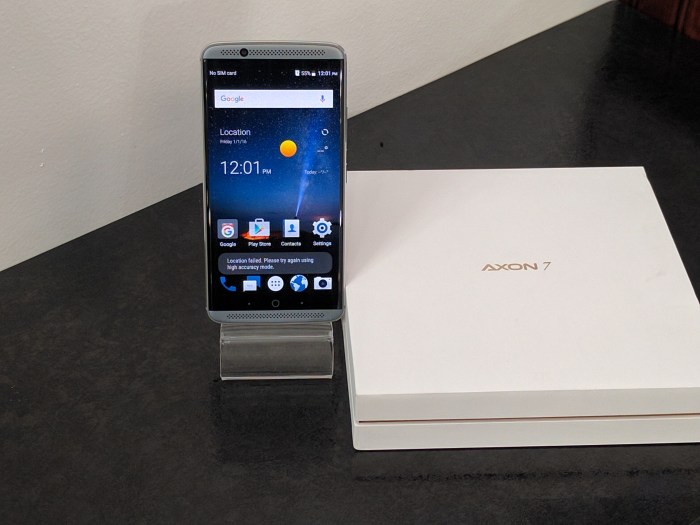
ZTE Axon 7: A Six-Month Review

So, 2017 is finally upon us, and one of my New Year’s Resolutions remains giving credit where credit is due.  Because of this resolution, it is time to give credit to the folks at ZTE for engineering a magnificent device, full of the pillars that make a smartphone great.  As I have been using this as my daily driver regularly for four of those six months, I felt it was my duty in helping you decide if this is the phone for you.

Sporting the now one-generation old Qualcomm Snapdragon 820, an Adreno 530 GPU, and 4GB of RAM, calling this a buttery smooth experience might be an understatement.  Even after the six months of installing and removing apps, playing games, tweaking the camera, making phone calls, and customizing the user interface (UI), this thing still hums along like a newborn.  Mixed with the proper amount of inertia dampening, flying through all home screens, streaming through your app drawer, or breezing through website on your browser of choice will be silky smooth.  In comparison to the current Snapdragon 821, you will find negligible slowing, as the 820 still proves as a powerhouse among processors.  In everyday usage, playing intensive games such as Marvel Legends with no problems was a constant.  I also attribute this to the fact ZTE clocked the processor in at a higher 2.15Ghz, as opposed to OEMs such as Samsung who generally clock their devices at the lower 1.8Ghz, thus minimizing power output on a similar chip. Also, this is a hybrid phone with dual-sim capabilities, or one sim and SD card.

The MiFavor and Android Marshmallow (6.0.1) software provides several welcomed features speeding up an already fast user experience, such as modified setting toggles, most used quick settings menu feature, and message alerts from the lockscreen, this will be a fun phone for daily driving.  And battery life should not be a daily concern, as the Axon 7 has a 3,250 mAh, which got me an average of 5 hours 32 minutes of screen-on time throughout the six-months of testing.  Don’t forget on those days you need to top off, quick charge 3.0 is present, and re-charging from 0 to 100% was done in 44 minutes, 48 minutes and 46 minutes, during my review.  Very sharp!

As for gaming, this is not just a fast device, things just look astounding on the 5.5″ Quad-HD AMOLED display, with a pixel count of 538, and the word “glorious” comes to mind when describing the picture quality.  Text and pictures are both sharp and very crisp, with just the right amount of saturation, and should be enjoyable for all types of viewers.  Additionally, the video playback was extremely pleasant, again, as the preset saturation levels provide lively color reproduction without sacrificing that true-to-life feeling.  Accompanied with the Dolby Atmos audio enhancement and a beastly high-quality dac, sound reproduction from the earpiece or stereo speakers in a word was phenomenal.  I was always a huge fan of the HTC boom-sound experience, and this phone not only reproduces those old feelings, but gives a one-up with the simply sublime audio output full of great pitch, punchy bass and moderate mid levels.  If listening to music, radio or watching your favorite shows is your thing, prepare to be dazzled by this mamma-jamma.  Related to the audio output, call quality was fantastic, and became utterly amazing when the voice over LTE (VoLTE) was initiated from the setting menu.  Using this on the T-Mobile network, callers sounded extremely crisp and clear, with them saying I sounded like I was in the next room.  Nice job, ZTE!

A fast processor, great display, and fantastic audio quality, what else would you need?  Well, how about a stunning and sleek looking phone along with those other features.  Phones today are seemingly bland with every manufacturer seeking the “premium” look, usually composed of glass or metal.  Well, ZTE does the same, but the Axon 7 sets itself apart with its unibody aluminum frame full of smooth, blended curves and near-bezzless front.  Coordinated with nice rich and darker color options, this device may look like others, but when I went sans cases, many of my friends would marvel “…man, that looks really nice…” or “What phone is that?”.  So if style is something you look for when you spend your money, I think you will be quite pleased.

Accompanied by a 20MP back camera with f1.8 aperture and 8MP front selfie-shooter with f2.2 aperture, your quest in being the next Marinka Masseus may hit a snag, as the cameras provide a respectable experience.  As with any cellphone camera, in great lighting, the Axon 7 captures near flawless photos full of deep colors, but not so much in low lighting.  The tendency for overexposure or blowing out any available highlights most certainly is present, but more than acceptable for posting on social media.  HDR definitely negates most of these deficiencies, and I would also advise keeping this turned on most times.  The manual mode offers additional settings and features for those demanding more controls for that “perfect” shot, but being someone who was satisfied with the HDR representations, I did not find myself using this feature much.  Optical Image Stabilization and Dual-Tone LED flash are present and add greatly needed features for getting the best action photos or offsetting contrast ambient lighting.  Additionally, video quality taken on the rear camera was great, with my only complaint being for a device with OIS, I still observed some jittery frames at times, but nothing that would be a deal breaker.

Hitting nearly every pillar of a great smartphone, there is little objection from me for anyone wanting to buy this phone.  Oh, did I mention the $399.00 price tag?  Yeah…all this for under $400.00, easily making this an easy recommend for anyone, especially for audiophiles.


Top Smartphones…2016 Edition

Seriously, the year is already over?!?!  Really?!?!  2016 was a, well, an interesting year, to say the least. From the Note 7 debacle, to the “wtf was that” called the LG G5, the overall dip in consumer spending as a whole, and Microsoft unable to give away phones, we scoured and identified the Top devices of 2016; the best little nuggets, shall we say, and composed this list ranking them.

For all you newbies and faithful alike, I break this down into two categories, well three this year, but more on that later, described as follows: (i) top premier smartphone – smartphones over $399 (ii) top budget smartphone – smartphones at or under $399. Bear with me as these are my honest opinions based on devices reviewed throughout the year. Hopefully you agree, but if not, just sit back and enjoy.

TOP PREMIER SMARTPHONES
1) Samsung Galaxy S7 and S7 Edge – You have to tip your hat to a company that learns from its mistakes.  The Galaxy line took some hits in 2015 due to poor battery life, lack of sd card expansion, and overly aggressive RAM management.  Call all problems corrected.  And just as a caveat, I’m not a big Samsung fan, but even I was amazed by the glory that were these two devices.

2) iPhone 7 and 7 Plus – Another bland offering from Apple this year, but what it lacks in that certain “Je ne sais quoi” is surely offset by the continuation of great software optimization, introduction of dust and water resistance (IP-67 certification), outstanding camera, and improved battery.  Again, the design matriculates along the boring scale, so something still to improve on, Tim Cook.

3) Google Pixel and Pixel XL – Didn’t like it and still don’t like it (for my own personal usage) but it still stands as one of the elite devices of 2016 for it’s impeccable camera in all lighting, great software and hardware synergy, and amazing screen.  If it was, say, $360 cheaper, it could arguably be the best device of the year, in my opinion.

4) LG V20 – LG may not be winning in overall popularity among consumers, but year-on-year, they keep cranking out gems.  The V20 does not deviate from that.  The secondary screen continues, and the battery life would make anyone pleased, so another great one from the South Korean maker.

5) OnePlus 3T – Yes, OnePlus devices have finally peaked above the budget threshold.  It was always a matter of time, but the company continues churning out the best “bang-for-your-buck” phones.  A whopping 6GB of RAM, impressive all-day battery life, all inclusive cellular connectivity, dual-sim capable, and sleek design are propelling Carl Pei’s baby to the head of the class in the industry.  For someone who still likes rooting and rom-ing, OnePlus is your ticket to paradise, so pack your bags, we leave tonight.

6) Motorola-Lenovo Moto Z Phones- Modularity done right is a truly splendid thing, and this was done right (take notes G5).  Motorola-Lenovo continues its grasp of fantastic designs and innovations, and I’m excited for what they will showcase in 2017.

7) Xiaomi Mi Mix – Bezzle-less?  Yup, bezzle-less display!  Truly, I don’t know if anything else needs to be said.

8) HTC 10 – So HTC dropped the “One” moniker and the front facing speakers, but kept the smooth, aluminum unibody figure, while improving both software and hardware performance. Still, something was missing from this one, as I could never call it a true “flagship” device, nor worthy of daily driver material.  But the once left for dead company finds itself resurfacing towards relevance….continue that climb young one!

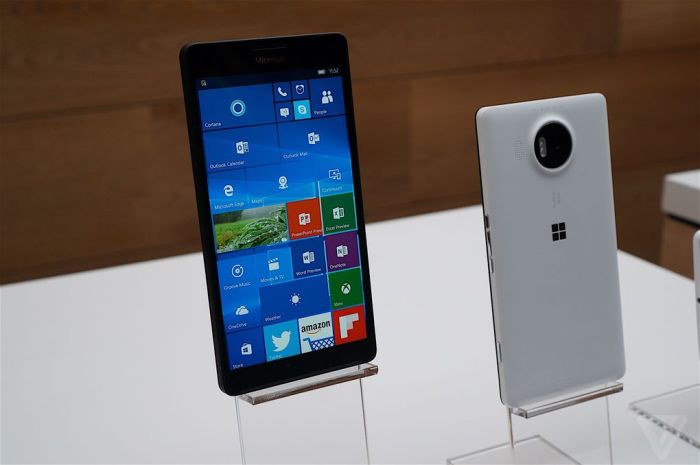
9) HP Elite x3 – Everyone who knows me, or reads my articles, knows I have a certain soft spot in my heart for Windows devices.  Enter the HP Elite x3, a device that got right what the Lumia 950 got wrong.  The hefty $649 price tag keeps this from being an easy recommend, but from performance to style, this was a hot device.

10) Asus Zenfone 3 Deluxe – When the heck did Asus phones get above $300?  Well, this was a year of exceptions, and the Zenfone did not escape those nasty clutches!  I loved testing this devices, as the pillars making a great device were present, but the only pillar I could not accept, the $659.99 price tag.  Much like I stated about the Pixel phones, a steep price reduction would put this in “must buy” territory.

BEST BUDGET SMARTPHONES
1) ZTE Axon 7 – I was over the moon in love with this device and still am (review still coming in a 6-months after format).  Great battery with quick charge capabilities, phenomenal audio experience, great screen quality, fantastic call quality, and outlandish RAM capacity makes this my past, current and future daily driver for awhile.  At the consumer-friendly $379.00 off-contract, you are getting a flagship-like experience for budget-like bucks.

2) ZTE ZMAX Pro – Get the crown out because ZTE cemented itself as most improved manufacturer of the year banging out two elite phones at pauper prices.  The ZTE ZMAX Pro, much like the Axon 7, shares a pleasurably unique user experience with little-to-no sacrifices. Being T-Mobile and MetroPCS exclusives knock down its rating from a potential top placing, but we can hope for the unlocked version, making this a must by for 2017.

3) Alcatel OneTouch Idol 4s – If a girl, or guy for you ladies, can cook, clean, hold you close, buy you presents, and care for you on those down days; they are a keeper.  The same can be said about the Idol 4s, as the attractive build, nice user interface, decent battery, came packaged with a Incipio case, screen protector, JBL Headphones, and VR headset for the low price of $399.00.  Idol 4s, will you marry me? For all you Windows junkies, she has a cute sister too (Idol 4s Windows).

4) Huawei Honor 5x – Building off their Nexus 6p inspired success in the Western Hemisphere, Huawei launched the Honor 5x budget device at CES earlier this year, and what a launch it was. Nice processing power, dual-sim capable, impressive call clarity, and a fingerprint sensor on a sub-$200 device made this an early recommend.  Even today, at retailer discounted prices, I still feel this is one of the better phones of the year.

5) Xiaomi Mi Note 2 – Xiaomi seemingly will be one of the best manufacturers we may never hear about in the US.  Churning out another wonderful device in the Mi Note line was a foregone conclusion for one of the top sellers in China, and during my testing, I was suprised by the zippy iPhone-esque clone.  Again, its radios are tuned for Asia and Eastern Europe, but for a Wi-Fi only device, you could do no wrong getting this.

6) Nextbit Robin – The startup company hoped on making waves in 2016, but instead, sales indicate merely a belly-flopping thud.  Currently going for as low as $179.99, a device sporting a now, only 2-generation old capable processor, front facing speakers, fingerprint sensor, and acclimating cloud storage, this falls in the great budget finds of the year.

7) Huawei Honor 8 – The Honor 8 was the Kat Dennings of phones.  It had the most amazing curves, glorious backside and magnificent display jammed into a nice little frame. But the user experience was more like Cait Jenner, as it was marred by poor (and that is being polite) battery life and and a quirky EMotion user interface.  That being said, if you value style, and a stunning one at that, over substance, the Honor 8 is for you.  And currently going for $299.99 with extras, it’s priced for us all.

8) Motorola-Lenovo Moto G4 and G4 Play – These probably would have fallen in the upper-tier of phones…six years ago, but for 2016, the sub-1080p display and lower-end processors were overcome by the immaculate battery life and zippier than expected performance.  Factor in a price tag under $200, and you just found the recipe for a happy entry-level device or a great backup device.

9) LeEco Le Pro 3 – I wanted to use a Pepe Le Pew pun but I shall refrain.  This newcomer in the US market has been turning heads with its first, yet quality offering.  The launcher and its layout prove problematic for Android experts, but slapping on a new launcher, you have something fabulous all for under $279.99

10) LG K7 – Debuting in January, my initial thoughts were this was merely replacement or interim phone material, but after my testing period, the Snapdragon 210-enabled device performed well above its specs.  Accompanied by LG’s stylistic and durable design for under $100.00….I smell a winner!

My father used to tell me, find the humor in a bad situation.  So folks, I bring you the new category for this year…

MOST ENTERTAINING SMARTPHONES…FOR THE WRONG REASONS

1)  Samsung Galaxy Fireball f/k/a Galaxy Note 7 – Was it going to start a fire or not?  Was it going to singe the hairs on your crotch or legs?  “Probably” was the answer for both these questions, and because of that, it was the most entertaining device of the year.  You may go for your nightly slumber only to wakeup and run screaming for the exits. But you must admit, any phone requiring you keep a fire extinguisher and some burn compound handy makes for good times.

2)  LG G5 – WTF?!?!  I know what LG was attempting, finally making the long awaited modular devices a reality, but this turned into a hot mess from jump.  If the G5 was a person, she would be that one girl who shows up at a party with a combed over weave, purple top with lime green skirt, and some knock off Jordan’s….like I said, a HOT MESS!

Well everyone, that concludes the top smartphones of 2o16.  Tell me what you think in the comments section, whether you agree or disagree.  Thanks and stay tuned for more!

Google Pixel Launch: What We Learned

October 4th was a date marked on every techies calendar, as Google promoted and teased a great unveiling.  Inclusive of all the hype and premeditated leaks, calling yesterday a great unveiling still constitutes as a mild understatement.  Ditching the popular Nexus line, Google revealed what they say was a project nearly ten years in the making with the new Pixel lineup.  You might be asking, “So, why the change?”  That’s a good question! Google states, the Nexus program was a tool showcasing the latest and greatest versions of Android, devoid of skins and unadulterated, paired with the best hardware of OEMs (original equipment manufacturers) such as LG, Samsung, HTC, Motorola, and Huawei; all previous Nexus phone designers.  For a six year period, the preset goals were achieved as these fusions provided us in the tech community some of the greatest phones of their respective years.  Granted, some where greater than others, hmm, I’m looking at you Nexus 6, but overall a successful campaign nonetheless. Now, Google wants to shift gears from not just providing a clean Android experience, but also designing and making its own devices. Enter the new Pixel and Pixel XL phones, accompanied by the Google Home, Google Wi-Fi, Daydream View VR Headset and Chromecast Ultra.

Occupying certain niche needs, I anticipate great success for the Google Home and Wi-Fi. Both allow for the continued push towards more technically sound and interactive homes, and I think both achieve this in grand fashion.  Granted, these are merely Google’s interpretation of products currently on the market, namely the Amazon Echo and OnHub Blue, but at their perspective price points, could provide competition for consumer attention.  I wasn’t as impressed with the Daydream VR Headset as I honestly believe this is still a gimmicky-purchase and not a must have for any buyer, but much like the home products, the price point would make this hard to ignore come holiday time.  I still prefer Samsung’s VR Headset because the more impressive build, but Daydream does allow a greater experience across all apps in the Android market over the former.  Not much needs to be said about the Chromecast Ultra, other than it’s an upgraded version from previous incarnations, with allowance for 4K UHD (ultra high definition) picture quality.  Again, for anyone with a 4K compatible television and $70 to burn, this is a fantastic option.

But you’re probably wanting info on the stars of the the event, the Pixel and Pixel XL phones.  Still reeling from the abrupt Nexus divorce, my honest feelings for these devices are lukewarm; at least for the time being.  The new 4.7″ and 5.5″ devices looked like a re-hash of phones already on the market, thus lacking a new approach I was anticipating.  I kept telling my buddy that they looked like the freakish three-way combination of the HTC 10, iPhone 6s and Honor 8.  All are great looking devices, but just don’t look quite right together.  Whenever I get my hands on review models, my initial thoughts may change, but if this the “girl” we decide to date after our great relationship with Nexus, she may need to put on a little more makeup before we go out.  Just saying!  However, the new color names are extremely catchy with the Very Silver, Quite Black and Really Blue.  Again, the overall phones look odd to me, but the Quite Black color scheme with the two-toned silver bottom accent looked cool.  In their totality, not anything groundbreaking with the hardware as we have 1080p and Quad-HD AMOLED panels, with the Snapdragon 821, 4 GB of RAM, bottom mount speakers, Gorilla Glass 4 and 32/128 GB ROM options; so solid if not spectacular.  But much like the Nexus phones, the newest Android version Nougat 7.1, will be the differential from other devices. Being the first shipping with this version baked in, 7.1 is utterly fantastic and a major step forward.  Newer launcher, Google Assistance, and revised Google Now functionality make this a near must-buy, as I was blown away with how intuitive the operating system has become.  I was ready to hand over my credit card right there on the spot!  Then Google announced the pricing and my credit card couldn’t find its way back into my wallet fast enough.  Starting at $649 for the lower-end variant and going up to $799, these seem destined for a similar fate of the Nexus 6 as a good device until you look at the price-to-value aspect.  Google does believe these are premium devices competing with the likes of Samsung’s S-line and the Apple iPhone, and I agree somewhat, as this is great software and hardware, but this seems way too pricey.  Using the Nexus pricing as a baseline, if these were in the $399-$549 price range, I could see this being hard to keep in stock.  But as much as $799?  I just see a slew of competition from other makers like Oneplus, Alcatel, Huawei/Honor, and LG being more enticing buys and keeping more Benjamins in your pocket. Additionally, knowing a ROM for the still glamorous Nexus 6p (or other Nexus devices), should be available soon makes this any even harder recommend.  At least for me.

There you have it!  Stay tuned for the upcoming reviews of all these devices.


Why Google…Why? Our Relationship with Nexus is Over

If I may quote every girlfriend I’ve ever had, EVER, “I think we should breakup, but can we still be friends?”  Yes people, sadly this is the current state of affairs for the soon-to-be defunct Nexus line of products.  That being said, I know each “relationship” endures its ups-and-downs and the last few years have been like a roller coaster, but how could this be the end?  Why Google…Why?  (Crying) I’ve given you the best years of my life and this is how you re-pay me?

For those of you not familiar with the Nexus program, here is your quick tutorial:  Google first introduced a Development program for its operating system (OS) where developers could purchase “developer-specific” phones free of SIM restrictions, which was a stark contrast for the heavily carrier-subsidized devices of the time.  Google proposed a full product expansion, fusing with original electronic manufacturers (OEMs) such as HTC, Samsung and LG, naming a few, creating a synergy of hardware and software innovations for sanctioned devices, witnessed over the last seven years.  This was dubbed the Nexus Program, and in January 2010, the very first Nexus collaboration spawned the Google Nexus One by HTC.  At the time, the HTC-made Nexus was a gem with a 3.7” inch display, 512mB of RAM, and the then blazing 1GHz Qualcomm Scorpion CPU, but more importantly, established the “treat-inspired” Éclair Android Operating System (OS) as a launch pad for further OS advancements.  Deemed an entry level phone by today’s standards, the Nexus One was every bit the flagship for its time and provided a platform for Google to showcase both its advancing OS and a vision for the future of mobile technology.  And showcase it did, as new followers would flock to the tech giant by the thousands, as rooting and rom-ing became the trending activities.  Not to mention, the Nexus line inspired OEMs further development in creating better devices geared to handle both entertainment and productivity needs of consumers.  One could argue a great partnership for all was created with an optimistic outlook for what the future may hold.

If the introduction of the Nexus One was the dating phase, then its successors proved a gracious courting period.  Ups-and-downs of any relationship occurred, but over the next few years, Google unveiled multiple OS follow-ups in FROYO, Gingerbread, Honeycomb, Ice Cream Sandwich, Jelly Bean, and my personal favorite Kit-Kat. Each more feature-packed than its predecessor, and with momentum and popularity growing in Android as a whole, this was parlayed into greater success for each subsequent Nexus.  Sales improved year-over-year, culminating in the vast popularity of the 2013 Nexus 5, running the then newest version Kit-Kat.  The LG-made device comprised three components making it nothing short of fantastic: an impeccable design and build, the newest version of Android, and a price-tag well within most consumers’ budgets.  The Nexus 5 was a stunning device, falling just short in acclaim to other Android offerings such as the Samsung Galaxy Note 3, LG G2, and HTC One; none of which could offer the pure Android experience followers craved.  Honestly, it could be said the apex of the programs success was achieved in the Nexus 5, as it was quite the banger.  On a personal note, mine is still running smooth as ever with the Dirty Unicorns ROM, and its one of the rare phones I will have a hard time letting go.

As with any relationship, the honeymoon has to end, right?  Shortly after the success of the Nexus 5, Google broke our hearts by announcing the train ride to Happytown may be coming to an end, and the eventual demise of the program was apparent.  Several leaked reports in late 2013 and early 2014 stated Google planned to do away with the line and work on other endeavors.  I can still hear the echoes of sighs and moans from the Nexus-lovers to this very day.  For many, this was truly a hard pill to swallow as the Nexus line was garnering its largest following and continued sequels seemed only logical.  However, Google further augmented fears by stating it had never intended for the Nexus line to last this long, and the eventuality of its demise was only a matter of time.  Such sour words were never spoken so harshly, as we had already endured the short-lived linger of the Google Play Edition devices, and this news was absolutely devastating.  However, prior to the release of Android 5.0, Lollipop, Google re-assured us Android junkies, the Nexus program would continue for the foreseeable future, giving a gleam of optimism for more great devices on the horizon.  Instead, we got the Nexus 6 smartphone and Nexus 9 tablet, both failing in comparison from previous iterations.  I reviewed both devices, and if you have not read those articles, my thoughts in a nutshell were they seemed “…rushed…” and “…incomplete…”   Additionally, the build quality on the HTC-based tablet seemed a step back from even the Asus Nexus 7 (2013) from two (2) years earlier, but with a much steeper price tag.  Not to mention, the Motorola-made Nexus 6, was not the next installment fans expected, as it was too unwieldy with its 6” display and wide body; nor did it possess the features of the Moto X, a device it closely mimicked, which was one of the top tier devices for the year.  Coupled with its steep price tag, limited availability, and the overall kinks within Lollipop, the majority of us wished Google had ended the relationship.  Although sales reflected modest gains, Nexus enthusiasts will point at these two devices as the weakest in the Nexus lineup thus far, and I can’t blame them.  If I may put my impartiality aside, these devices were terrible.  Overpriced and bland with problems does not win over hearts, and that was everything the previous devices were not.  If I could use an analogy, these were the girl (or guy) you meet at a party that looks so cute under the dark lights, but when you come outside, BAM, no way, Jose!  Yup, and that’s when the relationship went sour.

But much like that person you dated in high school you bump into years later looking good, and I mean REALLY GOOD, the debacle that was the Nexus 6 and 9 were supplanted by the gorgeous Nexus 6p and LG Nexus 5x.  Similar to the metaphor for this article, Google went back to a familiar “partner” for a re-vamp of the popular Nexus 5, with hopes of winning back fans already straying, but also paired with the mega-successful overseas companion in Huawei, resulting in two nearly flawless phones.  The magic was re-created as both these devices showcased the streamlined and very polished Android 6.0 Marshmallow, on beautifully designed hardware.  These two not only met success with the entrenched fans, but also established crossover appeal with new consumers, originally intended for the Nexus 6.  And in the blink of an eye, there we were back in love again.  Alas, the good times were only short-lived as Google has made breakup public, marking the end of the Nexus line and the introduction to a new partner, Pixel.  Additional leaked information states the new Pixel devices will implement additional software and interface tweaks over a vanilla Android skin, and the possibility of a locked bootloader could be a reality.  WTH?!?!  Since these devices are not yet released, we can merely hope for pleasant surprises, as this is such a dramatic deviation from the oft-problematic, but still great relationship we have forged with the Nexus line.

In summation, has it all been good?  No.  Has it all been bad?  Of course not!  You would never stay if it was all bad.  But the Nexus line has been like that difficult relationship that is coming to an end.  Could we be in store for something greater with the upcoming changes?  The possibility certainly exists, but for something ingrained as part of our yearly ritual in the tech world, it will be hard letting go.  Change is certainly inevitable, so here’s to hoping the new relationship proves as fruitful as the last.

A Quick Look at the HTC 10

HTC 10 Introduction – HTC YouTube

A phone by an other name would be just as sweet….not so fast!  As you all are well aware, flagship season, as I refer to this lovely time of year, is upon us.  We first were introduced to the gorgeous Samsung Galaxy S7 and its radiant glass design, and the the highly innovative and modular motif-based LG G5, both of which I will be discussing in my upcoming reviews.  Apart from the upcoming iPhone, the one device on many reviewers radar was the newest from HTC .  For many, this was more highly anticipated not because of the possible fanfare, but more-or-less, critics and fans alike were wondering what direction the struggling manufacturer would take needing a resuscitation of a brand grasping for continued relevance.  If you recall my article, Best Smartphones of 2015, I ranked the HTC M9, as one of the better devices from last year, but stated a major overhaul would be necessary for the company drowning in staganation.  Well, what we got is the HTC 10, a phone lacking clear direction and merely copying what others are doing, so much so it even dropped the “M” moniker.

First, I would like to clarify this is not a bashing of HTC or the HTC 10, merely the humble opinion of one reviewer who is not impressed by what I see.  I have been an avid user of HTC for many years now.  From time-to-time, I dust off my ancient HTC Amaze, and merrily go about my day with a phone I still love using.  And, I STILL feel like a boss when I pull out the fantastic M8, with those boom-sound speakers, in all its aluminum body glory.  Those phones were the embodiment and staples of the company.  A company resting its hat on a clean, user-friendly Sense UI and one of the greatest audio experience on a mobile device.  The camera was always a weak spot but what is beauty without a blemish.  Last year produced more of the same with the HTC M9, with the only deviations from previous versions being a shift of the power and volume buttons, which was largely unnecessary, and a continuation of the design of past M-series devices.  All-in-all, this was not bad, but in the fickle consumer world, buyers want continuous improvements as justification for spending money upgrading each year.  What we got was a case of, “If it ain’t broke, we probably aren’t going to put the time and effort to fix it”, as I was hard pressed in identifying an significant changes from M8 to M9.  As evidence by many other manufacturers, 2015 was the year of the fingerprint reader and Quad HD displays, none of which were present on the M9.  I read articles from fellow reviewers stating a shift to a higher resolution display, and minor augmentations of the body design and user language would make all the difference for what we believed would be dubbed the HTC M10.  Nope!  What we got was a Frankenstein clone in a hollow attempt to stay relevant.  Well, don’t color me impressed!

Because this is merely an initial thought and not full review, I won’t go through my standard review format.  However, I will tell the basics and specifications of the phone.  We now have the bump to a 5.2″ Quad HD resolution on a Super LCD display, with a Snapdragon 820 chip, 4GB of RAM, and expandable memory in addition to the 32/64GB on board storage.  Included is also a fingerprint sensor, a seamless metal body with chamfered edges, and Hi-Resolution (Hi-Res) audio outputs.  They cleaned up Sense UI, as its more vanilla Android Marshmallow with a few HTC tricks, but still very nice clean interface.  For those of you whom are audiophiles, be prepared to be underwhelmed.  As previously mentioned, I think of this as a Frankenstein clone phone, as only the body design is reminiscent of what I thought was the HTC calling card.  The dual front facing speakers from previous are replaced with one front speaker and a bottom facing “woofer”.  In all honesty, the sound was not as punchy for me, as highs were just okay, but bass sorely lacked, in my limited usage thus far.  Again, this was from someone expecting the same sounds from the M8 and M9, but I am feeling letdown so far.  The sound is good, but not HTC-esque sound.  And although they kept the same design language, I couldn’t help but think this phone looks like if the OnePlus 2 and LG G5 had a baby.  Seriously, that’s what it looks like to me!  Couple that with it went with near Nexus-like vanilla android, a la Motorola, and through in some Apple-compatible features; this seems like an attempt from a company whose back is against the wall, so they borrowed from everyone attempting to lure you in.  In my opinion, this is not a company re-inventing itself from its core characteristics, just throwing out something done before by others.  Also, did I tell you this phone will debut with a $699.00 price tag?!?!  No way, HTC!  Go sell crazy somewhere else because we are all stocked up here.

In being a reviewer, it’s my job to try and be as impartial as possible and help equip you with information as consumers.  Therefore, I reserve the right to change my thoughts and opinions as I give the the full review treatment.  But, I must attest to being a HTC fan, and thus keep asking myself the question, “Where did we go wrong”, but will keep vigilant during the review.  As is customary, my closing thoughts are for the price and what is available out there right now, I would not recommend this, but that opinion may change.  Please check back for the full review and have a great day!


Confessions of an OS Adulterer

For anyone who gazes upon this, I write this as a humbled man here to confess my sins.  Over the past two years, I have been cheating on my significant other, and I come before you to tell my story.  It all began when I was in my twenties, and much like any other tech noob, I was a wet-behind-the-ears little punk jumping from flip phone to flip phone.  Never a clue, nor understanding of where I was going, or what the future held.  But then I meet “her”, Android, and my life was forever changed.

It was a cold winter’s night in 2010, when I came upon her, and like any gorgeous woman, she stole my heart from the onset.  We met at Club Cliq, located at the corner of Motorola and Qwerty.  Now, I had frequented this joint for sometime; hell, I remember when it used to be called Club Razr, but the owners decided to upgrade, and the name change came along.  However, this was far from the old days, as this was the night my life would be different going forward.  I strolled in like a boss, with my game in full effect, checking out the honeys.  Everyone who was anyone was there that night!  Droid X was pulling mad girls, as he was the “big boy” of that day, and the crowd was hyped as DJ Atrix was layin’ down some serious tracks.  And that’s when it happened.  I could see her standing in the corner, those luscious Apps and silky performance, just beckoning me.  I walked up to her and gave her my best lines, and she was digging it.  Anyone could see she was totally into me, and right off the bat she let me know I wasn’t just any guy.  After a few minutes of talking, she looked me in my eyes and said, “Please call me Cupcake, all my friends do.”  Right then I knew love was on the horizon.  We ditched that joint, as she was about to take me on a ride across a world previously unknown to me.

Shortly after leaving Club Cliq, Android took me to this fancy place called The Samsung Spot.  Hours passed as we sat and drank, but after awhile she looked to me and said, “This place is a little cartoonish and the drinks are way too saturated, wanna go someplace else?”  And like any guy falling head-over-heels, I gazed at her with admiration and said, “Wherever is fine with me, as long as I’m with you!”  We enjoyed each others company until the sun finally came up.  It was then she turned to me and whispered, “I like you. Any chance we can do this again?”  My heart fluttered and I could barely hold myself back when I blurted, “I don’t want this to end…wanna go back to my place?”  She stared at me for a moment, finally bringing herself to say, “I would love to.”

From then on we were inseparable, with people saying we were attached at the hip (thanks to my belt clip).  The days went by too fast but our love kept growing.  We matriculated from the beloved Cupcake days to the period I like to refer to as the Kit-Kat years.  It seems like yesterday, when I marveled at her wearing this beautiful Nexus 5 outfit from the fabulous designer, L.G.  It was so gorgeous, and made me fall in love with her all over again.  Truly, we had the beginnings of a beautiful life together.  She knew she was my one and only.

But as time went on, Android began to make me feel like I was secondary, and that’s when our love began to fade.  She was going through a lot, I could tell, as we endured her whole “Material Design” phase.  It was hard for me, because the Kit-Kat girl I was madly in love with was losing her identity.  No longer the dark, mysterious girl I pined for, she was becoming more mainstream, more light-themed, like she wanted to be the girl everyone else wanted.  Things were changing for the worse, I wasn’t sure if they would ever go back to the way they were.

A few months went by and things were reaching their breaking point, and that’s when I bumped into her at the local electronics store, and by her I mean temptation.  Normally, a plastic-like girl such as her would not appeal to me, but remember, I was a lonely man.  She came up to me and said, “Hey, my name is Windows, but you can call me Denim.”  I started to tell her my named, but she stopped me and replied, “I know who you are!”  We casually talked for a few moments, but I found myself becoming more and more intoxicated by her lure.  Oh, and she was smart, she was like a computer as she had so much pertinent information ready at a glance.  She was so seductive and already had me in her web.  I left that day without her, but I couldn’t get her out of my mind.  She had sown the seeds of seduction and I was ready to partake in its forbidden fruit.

Three months later, I came back to that store, hoping I would see her again.  Sure enough, she was there, waiting for me.  She gazed at me and uttered, “I knew you’d come back.”  Like a nervous schoolboy, I tried to form words, but nothing came out.  Finally, I was able to say, “Windows, you know I’m in a committed relationship with Android, but I can’t stop thinking about you.”  She replied, “I know…so this is our little secret!”  It was that day I was to succumb to desire, as we began our secret affair.  I felt bad juggling two women like this, but Windows expressed she would eventually make me forget about Android.  The days turned to months, as our tawdry affair continued.  This vivacious vixen was so devious she would make me call her Cortana.  And sometimes, when we were alone, I would ask her, “So, Cortana…Who’s your daddy?” to which she would coyly reply, “Technically, Bill Gates is my father…”, but I knew the truth!  Eventually, as is the case, Android walked in as Windows and I were texting, in the very house we made.  It was a dramatic day, but the charade needed to be brought to light.

Android was understandably hurt and I tried to console her by stating it meant nothing.  But the damage was done!  Weeks went on and we barely spoke, until she said we needed counseling, but things could never go back to the old days.  Dr. Brownlee of the MKBHD Clinic attempted to repair our union by trying to rekindle what first bonded us, but she was different, I was different, we were different.  He kept reminding us things will get better, and that we’ll be able to multi-task in the “new version” of our lives, he so appropriately dubbed the “N” years; for “new” beginnings.  I knew he was right, but I couldn’t stop thinking about Windows; I was hooked!  I couldn’t wait for the day I could wrap my hands around her.  It’s wrong, I know, but desire knows no limit.

Funny and pun-laced story aside, as a reviewer, I am blessed to evaluate some great devices across the Android, iOS, and Windows platforms.  In 2014, I was presented the opportunity to review the Nokia Lumia 635, and it was far better than I expected, given its budget price tag!  Was it the most premium feeling phone?  NO!  Was it the fastest phone I ever used?  NO.  Did it have the best Apps Store?  Heck NO!  But up to that point I had never used a Windows device, and let me tell you, I was thoroughly impressed.  It was the simple things like a very user friendly keyboard, integration with components on my windows-based desktop, and the overall fluidity of the OS, that captivated me.  After talking to a fellow reviewer, he advised me these, and other features, are just as enticing on higher-end offerings.  Then, last year, I reviewed the Microsoft Lumia 640, 640 XL, and 950 XL.  Although, there were significant bugs with Windows 10, I saw lots of promise for the platform, and I loved using Windows 8.1.  Many reviewers assert Windows is dead, but I think the last few years have shown a re-dedication to make Windows a significant force in the mobile world.  Don’t get me wrong, I love how interactive and user-friendly Android is, but I could see myself ditching my Nexus devices and OnePlus Two for a high-end Lumia devices one day.  If you haven’t tried one, just buy one of the cheaper Windows phones, like the 640 or the new 650 and see what you think.  You might be surprised and begin a sinful affair with Windows.  But don’t worry, I won’t tell your current OS.