As a child, while watching my favorite sci-fi movies, I would be in awe as the hero hacked into the building mainframe from a 3-D terminal hub, allowing all the doors to open, thus leading to the rescue of the gorgeous damsel in distress, or pressing a button on his watch unveiling a virtual map leading to the treasure. Well, those once far-fetched ideas are no longer left to the imagination; they are here in the very world around us. Everything from touch-display buildings, 3-D and virtual reality museums, and interfacing with every facet of our home from a smartphone or tablet, may have seemed impossible then; but let’s face it, the future is present and incredible. Spearheading many of these advancements is a company you’ve probably heard, but may not have known how integral their contributions are for the whole. Today, everyone and their mother own a smartphone, and such, probably heard of this little thing called Gorilla Glass, the protective coverings for the displays, manufactured by Corning. However, Corning is no one-trick pony, as they are key contributors in numerous design and patent-pending advancements, allowing for the dreams of yesterday to become reality today. As their website banner states and so appripoaly exacts the premise of this article, “Our glass innovations power the devices that make lives easier, more entertaining, and more rewarding…”
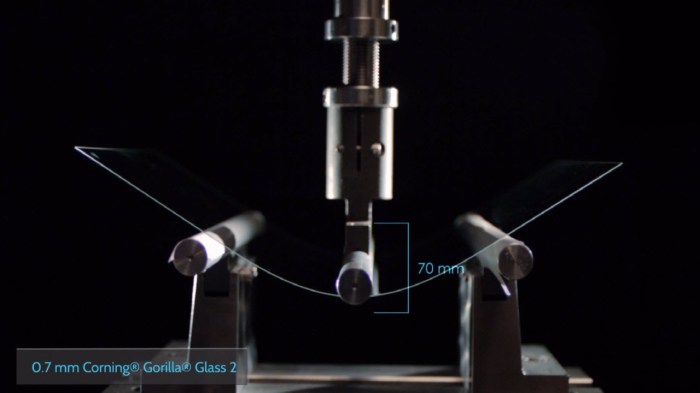
In business since the 19th Century, Corning already has made monumental offerings to current advancements in several industries, and continues to engineer modern progressions in Avionics and Aerospace, communication, architecture, and the mobile electronics. Two of the most notable contributions are their Gorilla and Willow Glass lines. Gorilla Glass is a commonplace for many of the mobile devices we use today, serving an integral buffer and touch-capacitive functions to interact with our devices. However, many underestimate the overall value of such a medium, as I did until researching for this article. Corning believes the continued advancements within the Gorilla Glass line will be the bridge to a more interactive world. Not merely an instrument to protect our displays, this glass can be incorporated with our existing structures such as wall, elevators, or direct link capable displays. The idea is the very information we find on our computers, smartphones and tablets can be expanded into a larger form factor. The concept of “smart walls” and “smart buildings” remains the underlying goal, and the possibilities and positive impacts to our world are vast. In the not-so-distant future, elevators will not only serve as a mode of transport between levels, but also as outlets to news and video feeds. The very walls in hospital offices and patient rooms will be filled with information on treatments, and will allow for improved methodologies of diagnosis and treatment, utilizing the synergy between medical instruments and this glass. Again, this is readily available now, as Corning reiterates the Gorilla Glass line serves as a principal, in that it can be used as on overlay focusing over the existing walls in a building or home. I’m fascinated for the day I go to a museum, and while I’m viewing a piece of work, I can touch the surrounding walls and retrieve pertinent facts regarding its origins to bios on the artist. In my opinion, what Corning has already done and hopes to continue will be a great bridge in the divide between today’s concepts and a truly immersible world.
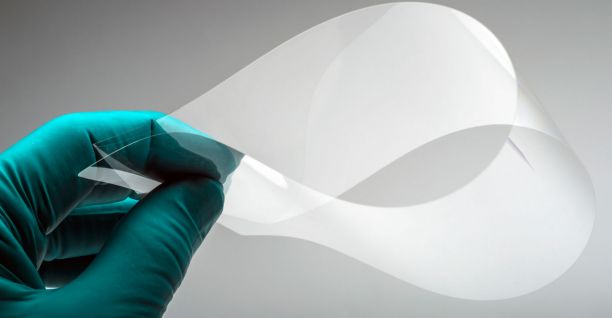
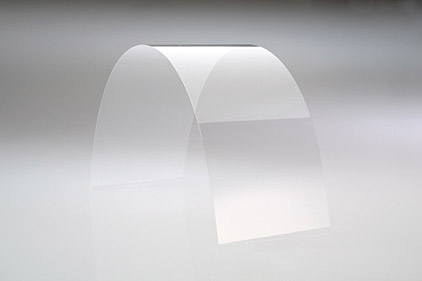
One other impact offering from Corning proves to be the applications of their Willow Glass line. Similar to Gorilla Glass, Willow Glass will serve as a principal for OLED and LCD displays. Unlike its counterpart, Willow Glass is geared more towards curved displays because of its thin, light and pliable characteristics. Because Gorilla Glass is mass produced in slightly larger form factors, utilizing the “roll-to-roll” production of Willow Glass, much like that of newspapers from a printing press, will allow more cost-effective and quicker production times. Additionally, Willow Glass can be used in smaller spaces, those the larger Gorilla Glass may not be able to be applied, while still maintaining similar, if not greater resolutions. Simply put, Corning sees these as a means of producing quality displays where the implementation of larger glass methods may not be accessible.
However the method, it is apparent Corning hopes the continued advancements of these lines, and additional product lines, will continue to shape the interactive world of tomorrow. I for one am impressed by the technology readily available and challenge designers implement in upcoming projects. Furthermore, I advise any readers to visit the Corning webpage and YouTube channel to see this and many other current projects that will unlock the future, today.
 JA3Tech